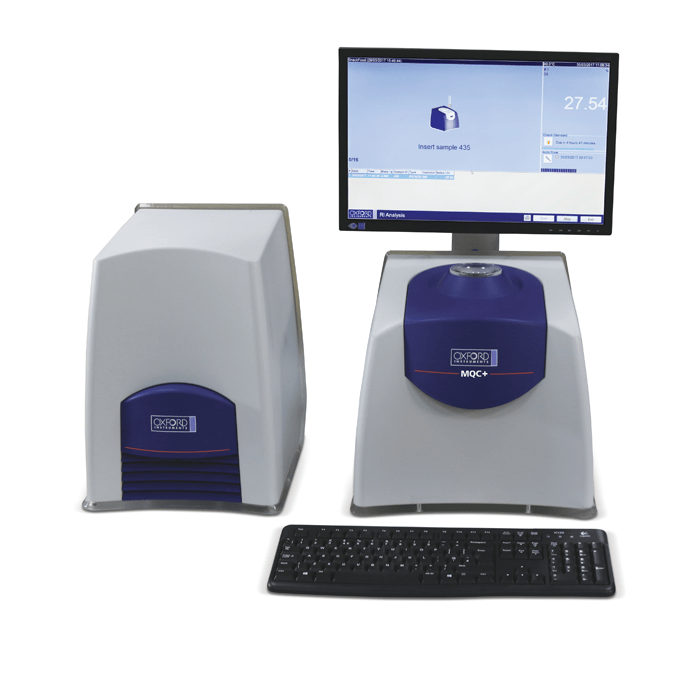
MQC-R Benchtop NMR
NMR
World’s first broadband Benchtop NMR
X-Pulse is a revolution in the flexibility of benchtop NMR. Combining true broadband X-nuclei capability, flow chemistry, reaction monitoring and variable temperature with superior spectral resolution, X-Pulse lets you perform a wide range of experiments on the bench in your lab.
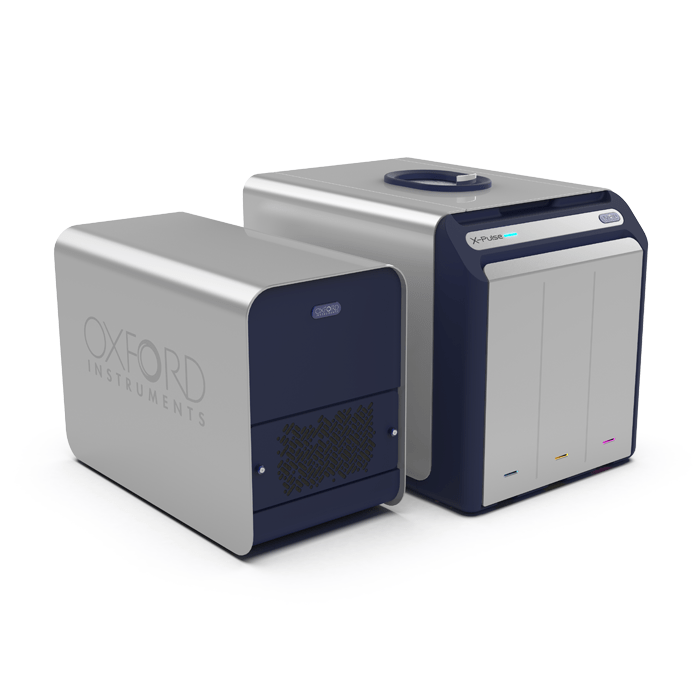
In August 2025, Oxford Instruments introduced the X-Pulse 90, the world’s first broadband 90 MHz benchtop NMR spectrometer. The increased magnetic field strength brings you:
This new system combines peak separation with high resolution, resulting in easier analysis in quantitative experiments. Furthermore, the high signal/noise ratio allows lower concentrations to be detected and accurately measured, while the broad range of nuclei available enhances research flexibility and futureproofs your investment.
Learn more
Run time – 3:06min
The Oxford Instruments X-Pulse 90 is the world’s first broadband 90MHz benchtop NMR. This short video outlines the benefits of the higher intensity magnetic field to users as well as pointing out the modularity and expansion potential of the system.
Rune time – 2:45 min
The optional X-Auto sample changer maximises throughput and automates data acquisition for up to 25 samples.
Newly added X-Pulse functionalities significantly increase ease of use, throughput and remote working capability while further reducing ongoing costs.
Operation of the X-Pulse is so simple, even novice users can collect spectra in just seconds.
The flow cell allows you to flow liquid samples at variable temperatures from 20-70°C so you can see the effects of changing temperature on your reactions. The flow cell is optimised to allow as much sample as possible to flow through the probe, allowing you to observe changes in your reactions as they happen and better understand your reaction chemistry.
X-Pulse offers you the freedom to select the nuclei to suit your specific experiments. Choose from 1H, 13C, 31P or something more exotic like 29Si, 11B, or 7Li. Simply select the nucleus of interest in the software and adjust the probe to ensure optimal experimental conditions.