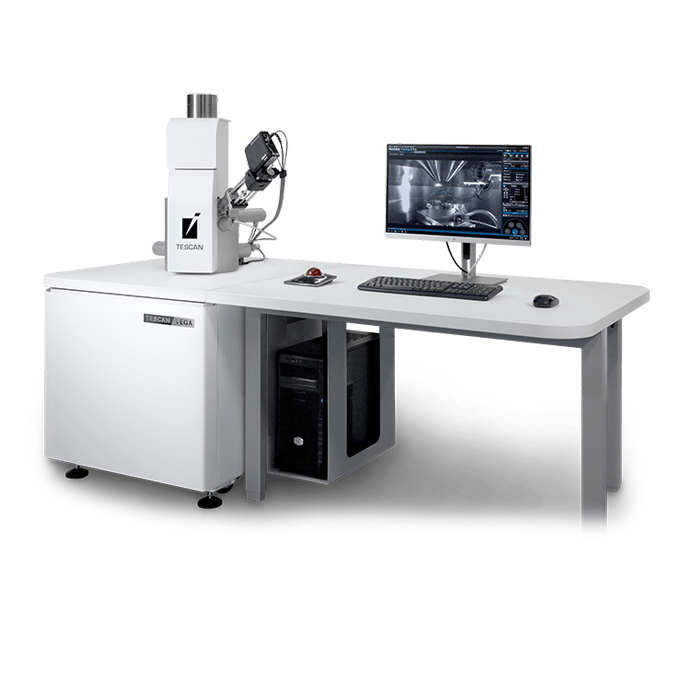
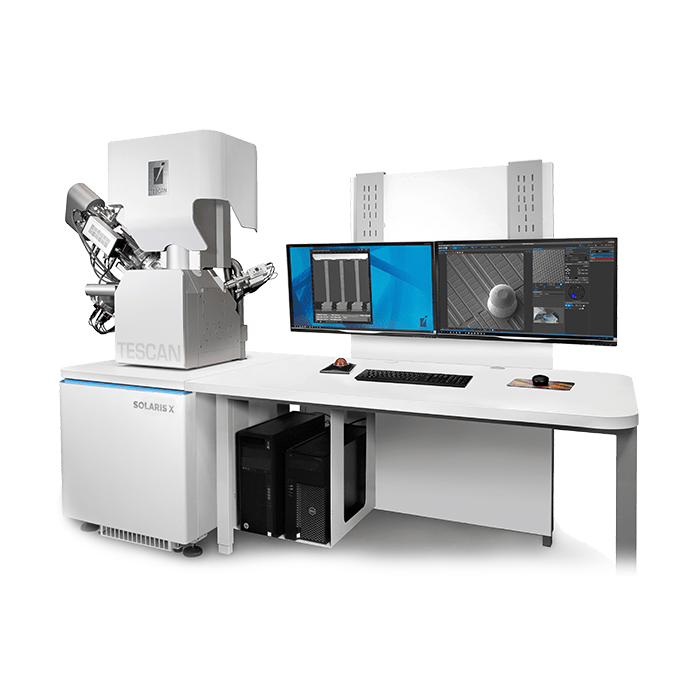
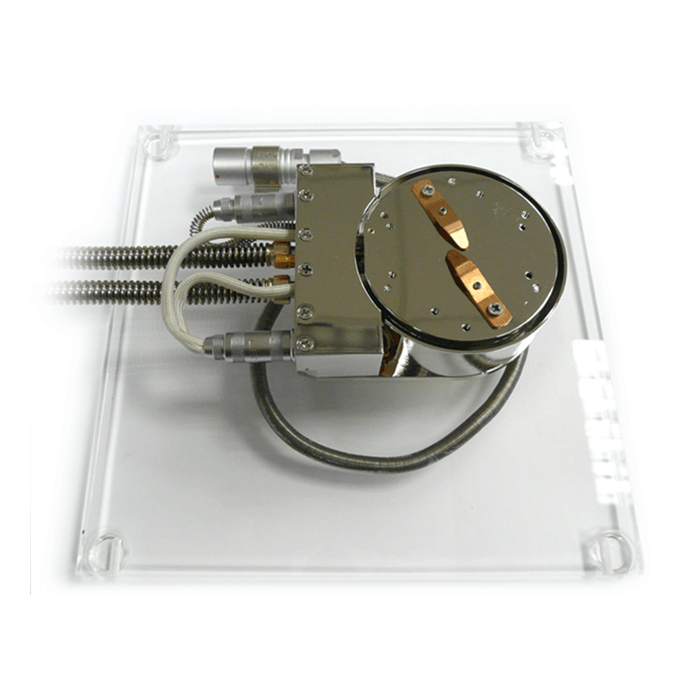
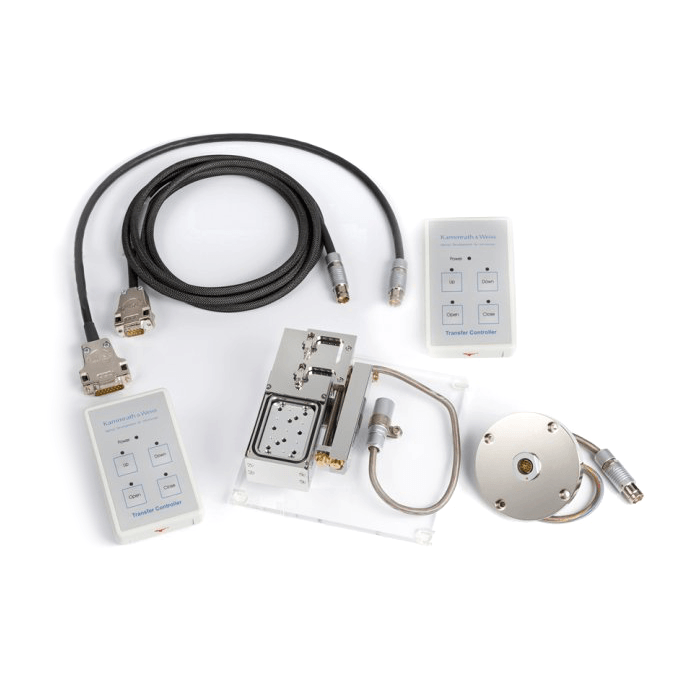
HydroBolt brings bulk liquid electrochemistry into the SEM, allowing researchers to investigate electrochemical reactions while directly observing the resulting changes to the sample.
Unlike conventional in situ liquid-cell approaches that use very small liquid volumes, HydroBolt is designed around a millilitre-scale electrochemical environment which produce more representative data compared to nanolitre samples. The system incorporates a dedicated working electrode on the Nano-Chip together with external counter and reference electrodes, helping provide a more reliable electrochemical response and enabling calibration of the reference potential.
This combination makes HydroBolt particularly valuable for research where understanding the relationship between electrochemical performance and physical structure is essential.
How Does HydroBolt Work?
HydroBolt uses a MEMS-based universal Nano-Chip to position and electrically connect the sample within the liquid electrochemical environment.
The basic workflow is:
Sample preparation → Electrolyte introduction → Electrical connection → Electrochemical experiment → Real-time SEM imaging → Data correlation
During an experiment, an electrical potential is applied to the sample through the working electrode while the reference and counter electrodes provide the necessary electrochemical control. Researchers can then monitor morphological changes in real time while simultaneously recording electrochemical measurements.
HydroBolt can operate with either static or flowing electrolytes, and both aqueous and organic electrolytes are supported.
Accurate Electrochemical Measurements
A key advantage of HydroBolt is its use of true external counter and reference electrodes.
The system incorporates an external Ag/AgCl reference electrode and Pt counter electrode, alongside an on-chip Pt or glassy-carbon working electrode. This configuration is designed to minimise potential drift and support reliable measurements during prolonged electrochemical experiments.
The system can also be used on the benchtop to calibrate the on-chip pseudo-reference against the bulk Ag/AgCl reference electrode, providing an additional level of experimental control.
Real-Time Electrochemical Imaging
One of the most powerful capabilities of HydroBolt is the ability to watch electrochemical processes while they occur.
Instead of characterising an electrode before and after an electrochemical experiment, researchers can directly observe the evolution of the surface and correlate those changes with applied potential, current and other experimental parameters.
This enables investigation of processes including:
- Electrodeposition
- Dendrite growth
- Electrode degradation
- Corrosion
- Battery electrode reactions
- Lithium plating and stripping
- Solid-electrolyte interphase (SEI) formation
- Electrocatalytic processes
SEM Imaging and Chemical Analysis
HydroBolt is designed to work with a range of SEM detectors, including secondary electron (SE), backscattered electron (BSE) and energy-dispersive X-ray spectroscopy (EDS).
This allows electrochemical measurements to be combined with complementary information about the sample:
- Electrochemical data – Potential, current and experimental conditions
- SEM imaging – Surface morphology and structural evolution
- EDS – Elemental composition and distribution
Together, these techniques provide a more comprehensive understanding of how materials respond during electrochemical operation.
Correlative SEM & TEM Characterisation
HydroBolt uses the same universal Nano-Chip design employed across DENSsolutions’ in situ platforms. This enables a sample to be investigated in the SEM and subsequently transferred to a TEM workflow.
This creates opportunities for multi-scale and correlative characterisation, allowing researchers to move from micrometre-scale SEM observations to nanoscale or atomic-scale TEM analysis of the same sample or location.
DENSsolutions’ Nexus software can bring SEM and TEM recordings together with electrochemical and flow data on a shared timeline, helping researchers correlate structural changes with experimental conditions.
Applications
Battery Research
HydroBolt enables researchers to investigate battery electrode reactions in real time, including lithium plating and stripping, dendrite growth and SEI formation.
Electrocatalysis
Study electrocatalytic reactions in liquid environments and investigate the relationship between electrode structure, catalyst behaviour and electrochemical performance.
Fuel Cells
Investigate catalyst degradation, membrane-electrode assembly dynamics and corrosion mechanisms under electrochemical operating conditions.
Electrodeposition
Observe the nucleation and growth of deposited materials directly while controlling the applied electrical potential.
Corrosion
Study the initiation and progression of corrosion processes while monitoring changes to the surface morphology.
Energy Conversion & Functional Materials
HydroBolt can support research into electrochemical systems where understanding dynamic structural changes is critical to developing improved materials and devices.
Benefits of HydroBolt
Observe, don’t just characterise
HydroBolt allows microscopists to observe electrochemical processes as they happen, providing information that may be lost when relying solely on pre- and post-experiment characterisation.
Combine structure with electrochemistry
Correlating SEM images with electrochemical measurements provides a direct connection between what a material is doing electrically and what is happening physically.
Realistic liquid environment
The millilitre-scale cell provides a substantially larger electrolyte volume than many conventional nanoscale liquid-cell approaches, making it well suited to bulk electrochemical studies.
Reliable potential control
Dedicated reference and counter electrodes help maintain a reliable electrochemical response and enable reference-potential calibration.
Flexible experimental conditions
HydroBolt supports static or flowing electrolytes and both aqueous and organic electrolyte systems, providing flexibility across different electrochemical applications.
Extend your SEM
HydroBolt adds an electrochemical capability to the SEM, transforming it from a primarily imaging and analytical platform into a tool for dynamic, operando materials characterisation.
Connect SEM and TEM
The universal Nano-Chip enables researchers to establish correlative workflows between SEM and TEM, connecting observations across length scales.
Bring Electrochemistry into the SEM
The DENSsolutions HydroBolt provides microscopists with a powerful way to investigate electrochemical processes while directly observing how materials change. By combining bulk liquid electrochemistry, electrical biasing, high-resolution SEM imaging and EDS analysis, HydroBolt helps bridge the gap between electrochemical performance and structural evolution.
For researchers working in battery development, electrocatalysis, fuel cells, electrodeposition, corrosion and energy materials, HydroBolt provides a flexible platform for real-time, in situ electrochemical characterisation.
See electrochemistry in action.
Contact AXT to discuss how DENSsolutions HydroBolt can expand the capabilities of your SEM or FIB system.
Related